making, unmaking, remaking
Body of Work
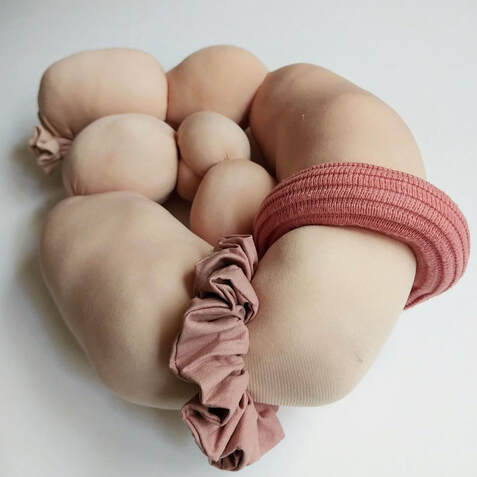
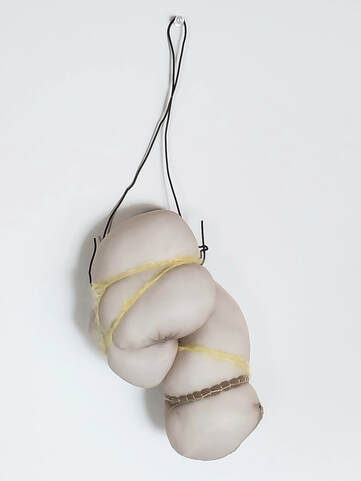
Body of Work is a project that explores the possibility of a circular economy in the textile arts sector. With approximately 6000 kilos of textiles and clothes discarded in Australian landfill every 10 minutes (Monash Sustainable Development Institute), this project explores a new model of making textile artworks that extends the lifecycle of materials and the artwork. This model of production includes sharing materials, reusing clothes as art materials, refurbishing, and recycling materials and remaking existing artworks into temporary and permanent works.
Body of Work continues Karryn's ongoing interest in the embodied sculptural object and the relationship between bodies, objects, and spaces.
Body of Work is a project that explores the possibility of a circular economy in the textile arts sector. With approximately 6000 kilos of textiles and clothes discarded in Australian landfill every 10 minutes (Monash Sustainable Development Institute), this project explores a new model of making textile artworks that extends the lifecycle of materials and the artwork. This model of production includes sharing materials, reusing clothes as art materials, refurbishing, and recycling materials and remaking existing artworks into temporary and permanent works.
Body of Work continues Karryn's ongoing interest in the embodied sculptural object and the relationship between bodies, objects, and spaces.
|
|
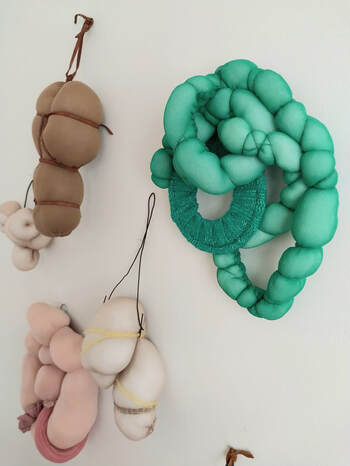
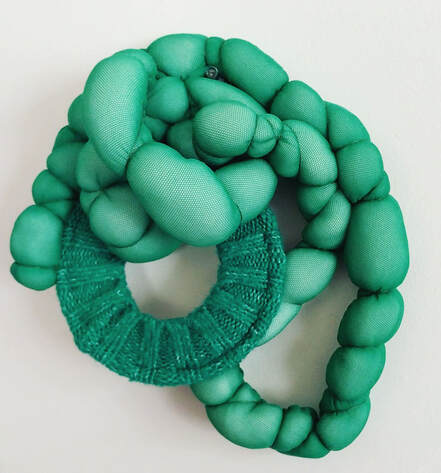
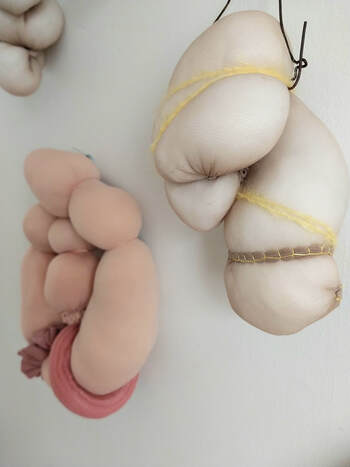
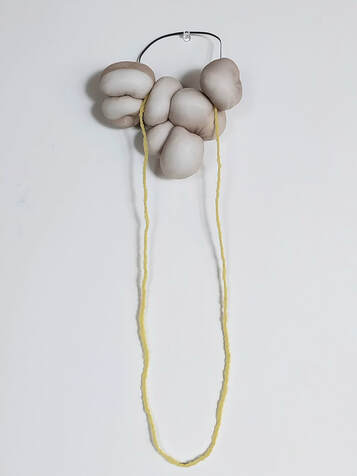
Body of Work exhibited in Factory 49: A Tribute exhibition at Articulate Project Space Sydney 2024
Boundaries
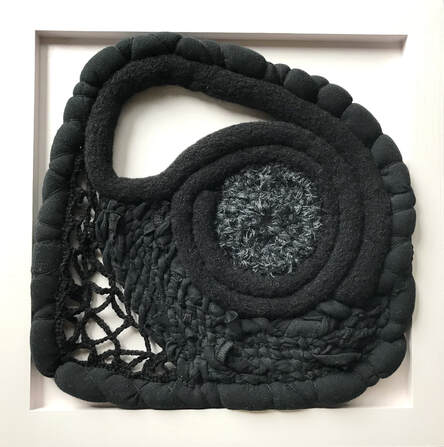
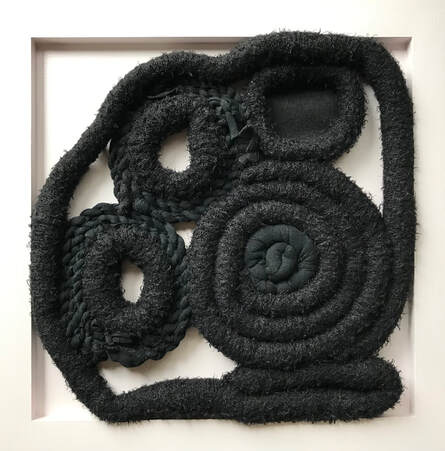
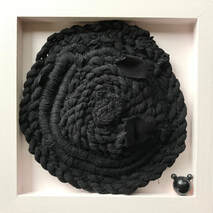
Boundaries is a series of works made from recycled clothes and other wearable objects. Materials including T-shirs, leggings, tops and accessories are coiled, padded, crochet, twined, sewn, and glued to create intimate bodily shapes and spaces. |
|
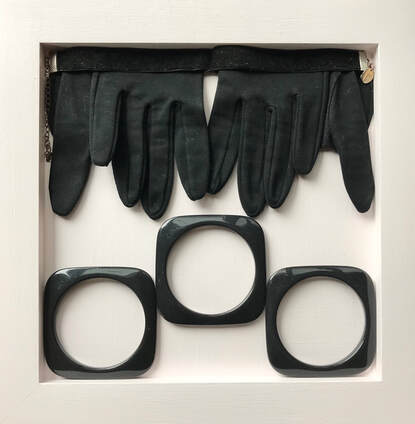
Waste Not Want Not at Geelong Art Space |
|
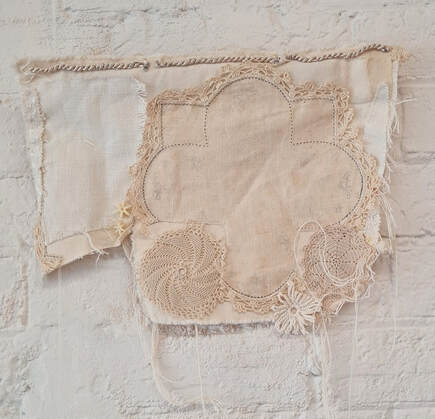
Discarded
Discarded is a femmage using found objects, leftover canvas scraps, used doilies, curtain cords, and fabric pieces. An eclectic group of materials, collected over many years; some gifted from friends, others found in family collections and one piece picked up from the ground as I gathered discarded objects in my hometown cemetery. These abandoned materials evoke a sense of nostalgia and loss; however, made into a new work, these cast offs have a new life of value and significance.
Dimensions: 35 x 25 cm (Height x Width)
Exhibited at Geelong Art Space 2023
Photo by Katherine Marmaras
|
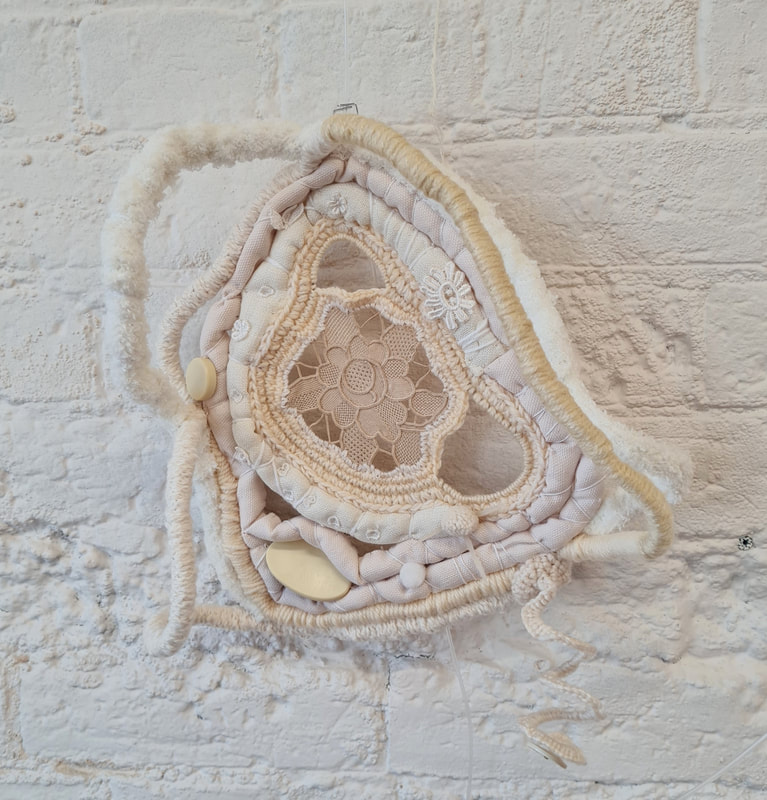
Recovered Recovered is a coiled, crochet, covered work that uses found objects, discarded fabric, and leftover yarn. Covered yarn and coiled fabric strips are spiraled around a central floral piece evoking a small, quirky, ‘natural’ world, bleached of any colour. ‘Recovered’ is one of a number of works that uses feminist methodologies of thinking and feeling to produce large and small-scale organic shapes and patterns out of found and recycled materials. Dimensions: 30 x 30 cm (Height x Width) Exhibited at Geelong Art Space 2023 Photo by Katherine Marmaras |
|
|
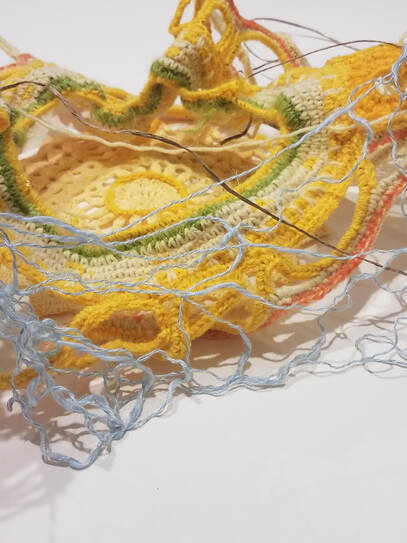
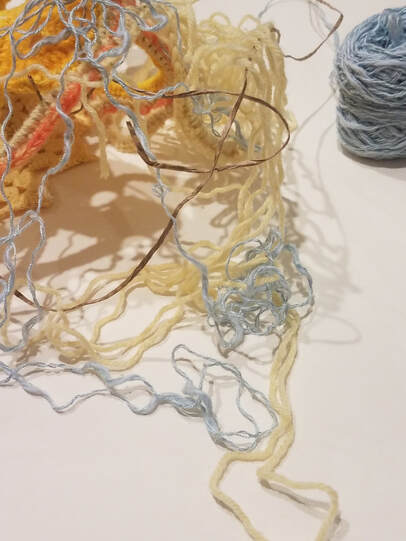
untethered _ unmaking material: yarn, florist wire, found objects (doily, pom-pom) studio experiment - seeing if unmaking can provide knowledge in a similar way to making untethered -to free from to free from expectations of what it is to make a finished artwork that sits on the wall to be viewed to free from the restrictions of making unmaking made works what about this suggests something of the human experience? what to learn from the unmaking ? space created by the work as unmade do we think about the whole or just the unmaking? doing something/making something/unmaking something when I don't understand what I am doing, making, unmaking requires some trust in the materials and in the processes requires a willingness to continue without critique requires letting go of the expectations of a finished work 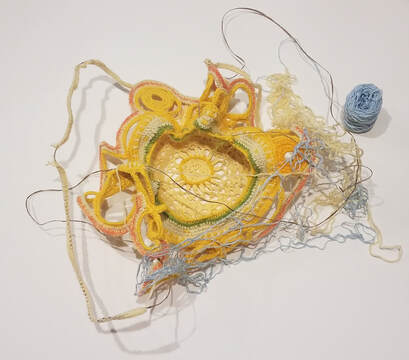
|
|
making_unmaking
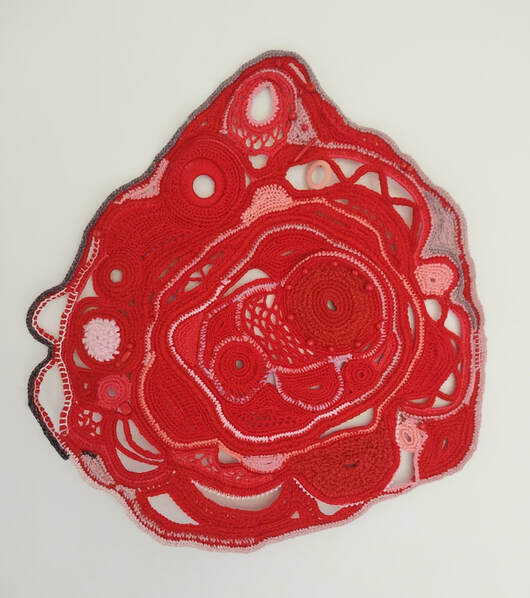
'All at once' Crochet, coiled yarn, florist wire, beads
50cm x 50cm
Year: 2022
Exhibited in Red Things at Post Gallery
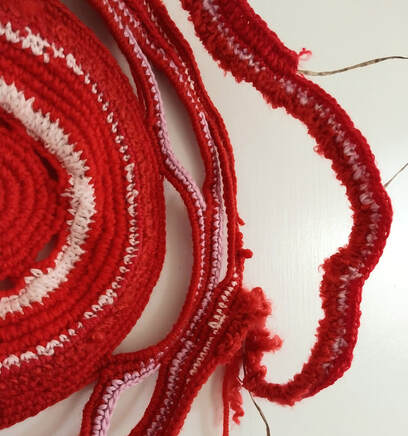
'It's all coming apart' Crochet, coiled yarn, florist wire, beads variable dimensions 2022 Exhibited in Red Things at Post Gallery
